


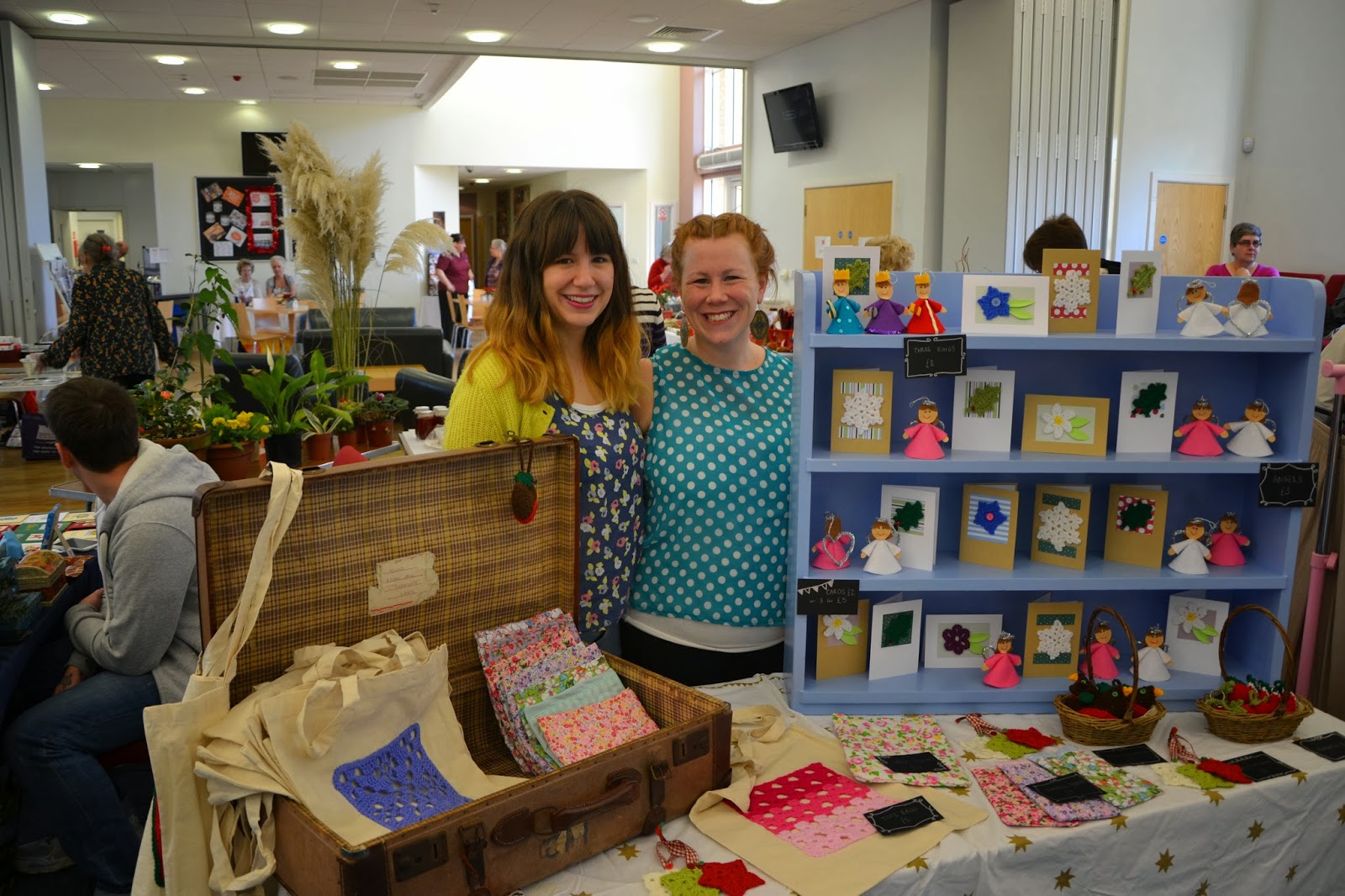
Finding tips and information for selling at craft fairs isn't easy. We had a lot of fun heading down to some craft fairs last year and while it was our first time we feel like we have learned so much already. We wanted to share some of these lessons with you in case you are thinking about it in the future. Some are general about your stall and style, and some are more specific about what to take. I hope they can help:
1. Think about working with some one else
Cassie suggested that we could work together at some craft fairs for the first time this year. The biggest bonus of working together is there is less preparation to do. I made the angels, iPad and kindle sleeves and the other nativity figures and Cassie made the granny square bags, the key rings, robins and cards. We didn't need to come up with so many ideas each because we had enough between us and we didn't have to do so much making but could split the cost of each stall between us.
2. Think about how well your items go together
When I shop at craft fairs I am always much more attracted to stalls that have a clear 'image'. This usually comes from the personal skills and style of the maker (or makers). Cassie and I have over-lapping skills and similar styles so our 'image' was quite natural. I would describe it as Colourful Handmade Chic but you might want to call it something different!
3. Try to find fairs that fit with your style and price
One mistake we made was going to a fair where almost every one shopping there was able to make all the things we were selling. At this fair we only just covered the cost of the table that we had hired. Furthermore we were the most expensive stall by quite a wide margin! Try to find out the sort of customer that you might get at each fair and consider all you prices for that individual fair. We actually found finding fairs one of the hardest things to do so have a look around at whats local and not so local.
4. Think carefully about your price
I would say pricing when you start out is very tricky. Consider the cost of the the materials used, factor in the time you took to make each one (bare in mind that the more you make the quicker you will get) and look on Etsy for how much others are selling similar items for. Then come up with a price. If this seems too high to you and you think you won't sell any start with just a few and see if they sell. Or you could make just one to display and take orders for others (factor in postage costs too). If your price seems too low, mark it up a bit to start with and you can always take lower offers if people are interested on the day but think its too much. All in all this is tricky, sometimes you'll get it right and sometimes you won't and peoples interest will vary from fair to fair any way.

5. Consider your display and how it fits with your style
When you think about how to display your items try to fit this with your style. Don't forget you have a limited amount of table space so add height if you can. Even if you love lots of colour (we obviously do) try to make your background fairly neutral because you want your products to stand out but this still can fit within your style. Cassie bought this bookshelf for £5 and painted it. It was a bit cumbersome to take to and from each fair but it was perfect for displaying our cards and angels. It fit with out colourful theme, added lots of height and extra display space but was plain enough that our goods stood out.
6. Remember that you might have to adapt your display
Each craft fair you go to will have slightly different tables and layout so try to be flexible with your display. We couldn't use the bookcase at one of the fairs we went to so we had to figure out a new way to display the angels and the cards. We used a bench and covered this with out table cloth to make extra surface space and a different height.

7. Stand up and say hello to potential customers
Customer service is really important to me when I go into a shop, if the assistants are not friendly I am instantly put off buying and often walk out the shop. This is even more important when you are selling your own goods. If you have put time and effort into making things, put some effort into selling them too. If you don't sell then you might not make much profit or even make a loss. We had chairs behind our tables at all the fairs we went to. We moved them before the fair started so we weren't even tempted to sit down. If you are doing a longer fair this might not be practical but when there are people near your stall you should stand up. Also don't be tempted to spend the whole time chatting with the person you have gone with, I don't mean stand there silently but when a customer comes pause your conversation to speak to them instead.
8. Look Nice
Wear something nice, do your hair and put some lippy on. I am not talking ball gowns or cocktail dresses, but something that fits with your style so you are presenting an image of the business through yourself as well. We dressed colourfully but fairly casually and smiled. Easy.
9. Make a stock list
Have a list of what you have made and tick it off every time you sell one. This was essential for us because we were doing it together and needed to make sure the right money went to the right person but I would really recommend doing this even if you are on your own. Every time you tick something it's very satisfying and without it you would easily lose track of what you have sold. Also if you are planning to do more fairs in future its a great way of seeing what sold well so you know what to make for next time
10. Take business cards
Even though you are just starting out you need to have something with your website, blog or e-mail address written on to give to each customer. You never know if someone may need to contact you. They might want to ask something simple about washing or repairing an item or they may want to contact you to order more. If you have one item that you consider to be your best and most important then its a good idea to have a picture of that on the business card too, the card may travel and end up with someone who has never seen you before and then has a reason to visit your site. My business cards didn't have this this time but they might next year. Bags also add to the whole impact of your business and also are very practical for people who are hoping to buy more than one thing.

When you are making your goods it is very tricky to know how many to do of each before you sell for the first time. Remember you are more likely to sell more of your smaller and cheaper things so make the most of those. Try to make enough to you fill your table but have spares in a box underneath so you can replenish when you make sales.
12. Think about what you will do with whats left
Unless you are only selling at school fairs its probably not a good idea to have an empty table at the end of the day. Obviously though you want to sell as much as possible but you will almost certainly have some left over so what are you going to do with them? The more fairs you go to the easier this becomes, you know you have more fairs to go to and it becomes easier to know how much to make for each time so I would recommend booking onto at least 2 or 3 for your first year. If you don't sell everything then consider setting up an Etsy shop or selling your goods via your blog or website. (More on this to come another day).

13. Take something to drink and eat
While you don't want to be talking to customers while you have your mouth full of sandwich, you will be there for quite a long time and, especially if you're working alone, won't be able to leave your stall. So take a flask of coffee and something to snack on.
14. Enjoy it
You absolutely must enjoy yourself. We went with the attitude this year that we loved making things and thought it would be fun. We wanted to cover our costs but our main aim wasn't to start a profitable business to support ourselves. Even if your aim is to go into serious business of craft fairs it is essential that you are enjoying yourself or you will simply burn out and not be successful.
This is by no means an extensive list of all the things you need to think about to sell at craft fairs. The one place I managed to find a good list of instructions was on this list from handmade jane. It is very helpful and it gives you a list of things you need to take with you, but hopefully we have given you a few ideas of how to plan ahead for your first craft fair. Zoe (and Cassie). xx


